

Fraud and Cargo Theft Prevention
Review the driver and truck before pickup, follow the load in transit, investigate exceptions, and keep shipment evidence together. CargoGuard supports freight brokers, 3PLs, and shippers as they review fraud and cargo-theft concerns.
Freight Fraud and Cargo Theft Are Related but Different
The same shipment can involve identity questions, unauthorized carrier changes, suspicious tracking, or physical theft. The safest response is to identify the specific concern, review the available evidence, and follow the procedure that fits that risk.
Common Freight-Security Concerns
Double brokering
Double brokering can involve a load being re-brokered without authorization, creating uncertainty about who is actually handling the freight and who should be paid. CargoGuard’s double brokering prevention workflow focuses on comparing the pickup assignment with the driver, truck, tracking, and shipment evidence.
Unauthorized carrier substitution
A carrier, driver, truck, or contact may change for legitimate reasons, but an unexplained change should be confirmed through trusted contacts before the freight is released. See the unauthorized carrier substitution workflow for the review steps.
Identity and impersonation concerns
Fraud can involve stolen or altered business identities, changed contact information, or people representing themselves as another carrier or driver. FMCSA advises brokers and carriers to independently verify contact information and investigate suspicious identity changes. Review FMCSA broker and carrier fraud guidance alongside your own procedures.
Cargo theft and fictitious pickup
Cargo theft focuses on the loss or unlawful taking of freight. A fictitious pickup can involve a person or truck collecting freight under false pretenses. CargoGuard can support cargo theft prevention procedures with driver review, truck evidence, active tracking, alerts, and delivery records.
Before Pickup: Verify the Assignment, Driver, and Truck
Use driver verification to review license information, selfie checks, registration details, and other available verification results. Compare those records with the driver and equipment assigned to the shipment.
Requested truck and pickup photos add visible equipment details with time and location context. If carrier markings, plate information, registration, driver information, or contact details do not fit the assignment, confirm the change through established carrier and pickup contacts before continuing the normal release process.
A successful verification result does not authorize a person to collect every load. The broker, shipper, and pickup facility still decide whether the specific pickup satisfies their release procedures.
In Transit: Follow the Load and Investigate Exceptions
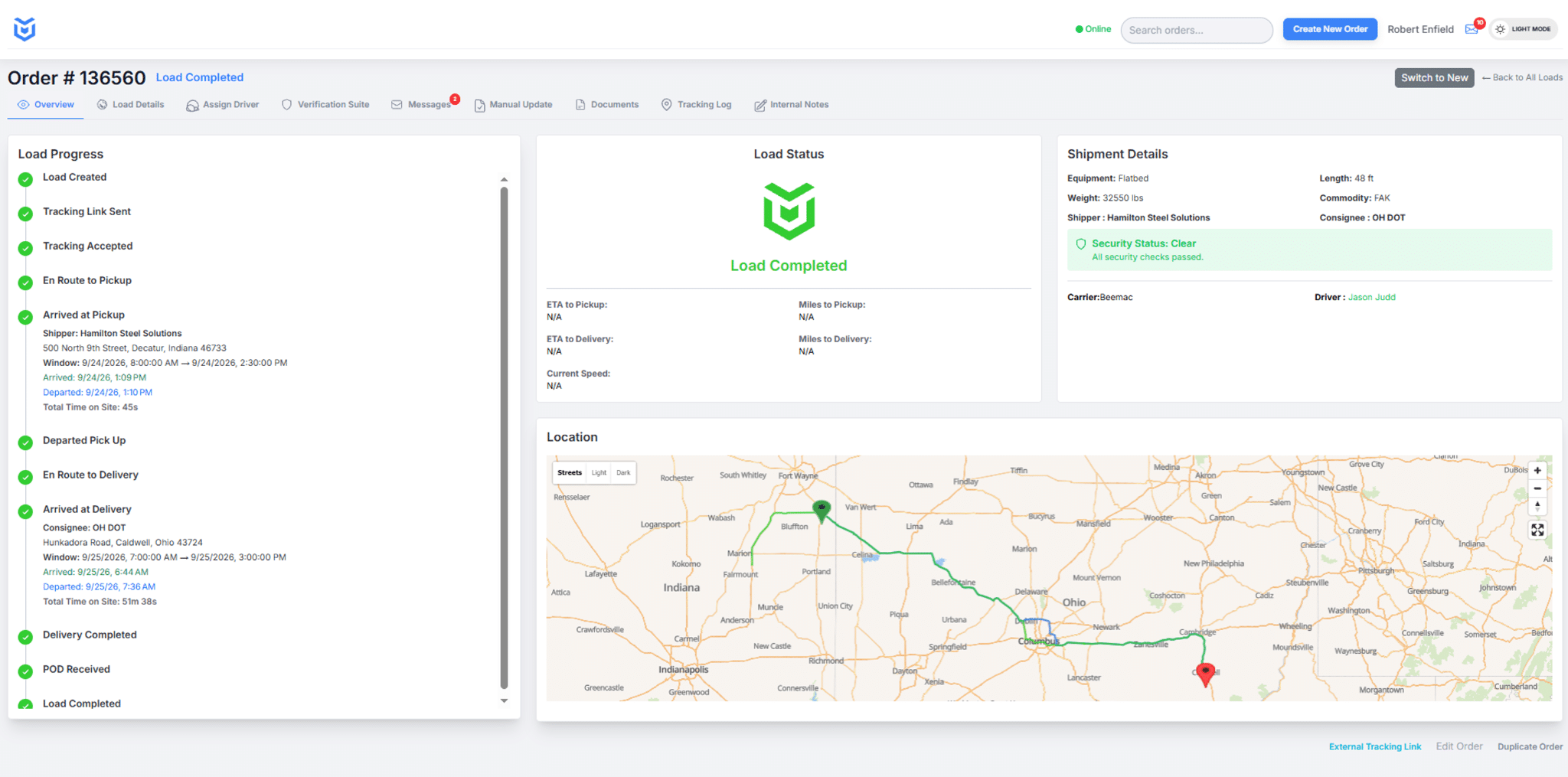
For loads actively tracked through CargoGuard, use real-time freight tracking and the load status timeline to review the latest reported location, timestamp, shipment status, and history.
Anti-spoofing GPS checks and shipment alerts can surface activity that deserves attention. A missing update, potential spoofing signal, device change, route concern, or unexpected stop should be reviewed with the rest of the shipment record. An alert alone does not prove theft, fraud, or double brokering.
At Delivery: Keep the Supporting Evidence
Keep pickup photos, tracking history, timeline events, bills of lading, and proof-of-delivery records associated with the shipment. Secure document capture helps organize the available paperwork with the load so a later customer, claims, or security review starts with a clearer record.
Shipment evidence can support an investigation, but it does not guarantee a particular legal, insurance, payment, or claims outcome.
What CargoGuard Can and Cannot Determine
- CargoGuard can organize verification, tracking, photo, alert, and document information for review.
- CargoGuard can surface mismatches and tracking concerns that may require follow-up.
- CargoGuard does not automatically decide that a person, carrier, or shipment is fraudulent.
- CargoGuard does not replace carrier vetting, shipper release controls, insurer requirements, physical security, or legal and compliance advice.
- No software platform can guarantee that every fraud or cargo-theft attempt will be prevented.
Choose the Detailed Workflow That Matches the Risk
Use Freight Fraud Detection for a general suspicious-activity review. Use Double Brokering Prevention for unauthorized re-brokering concerns, Unauthorized Carrier Substitution for unexplained carrier or equipment changes, and Cargo Theft Prevention for theft-focused procedures.
For dated industry figures and source links, review the Freight Security Statistics page and Freight Industry Reports.
Freight Fraud and Cargo Theft Questions, Answered
What is the difference between freight fraud and cargo theft?
Freight fraud is a broad category that can include identity misuse, unauthorized brokerage, payment schemes, impersonation, or manipulated shipment information. Cargo theft specifically concerns freight being unlawfully taken or diverted. Some incidents can involve both.
Does a driver or truck mismatch prove fraud?
No. A mismatch is a reason to investigate. Confirm the change through trusted carrier and pickup contacts before deciding whether it is authorized.
Does a GPS or anti-spoofing alert prove cargo theft?
No. Tracking signals must be reviewed with the assignment, driver information, photos, shipment history, and direct follow-up. Device and connectivity issues can also affect tracking.
Can CargoGuard replace carrier vetting?
No. Carrier vetting evaluates the company before the shipment. CargoGuard adds shipment-level driver, vehicle, tracking, photo, alert, and document context around the active load.
Can CargoGuard guarantee fraud or theft prevention?
No. CargoGuard can support verification, tracking, evidence collection, and exception review, but no software platform can guarantee prevention of every fraud or theft event.
Where can we find current freight-security statistics?
Use CargoGuard’s Freight Security Statistics page for dated figures with source links and reporting context.
Review a Load With CargoGuard
Bring your pickup, tracking, fraud-review, and delivery process to a demo and walk through the CargoGuard workflow step by step.