
Freight Broker Driver Verification: 7 Critical Checks
Short Answer
There is no general federal rule that says a freight broker must personally qualify every individual driver the way a motor carrier does. Motor carriers have the direct driver-qualification duties under the Federal Motor Carrier Safety Regulations. But for fraud prevention and shipment security, FMCSA recommends that customers maintain driver and vehicle logs, record tractor and trailer information, request photos, and compare the equipment at pickup with the carrier that was contracted.
That means broker-level carrier vetting and driver-level shipment verification are different controls. A broker can verify the person and equipment associated with a particular load without pretending to perform the motor carrier’s full regulatory driver-qualification function.
In this article
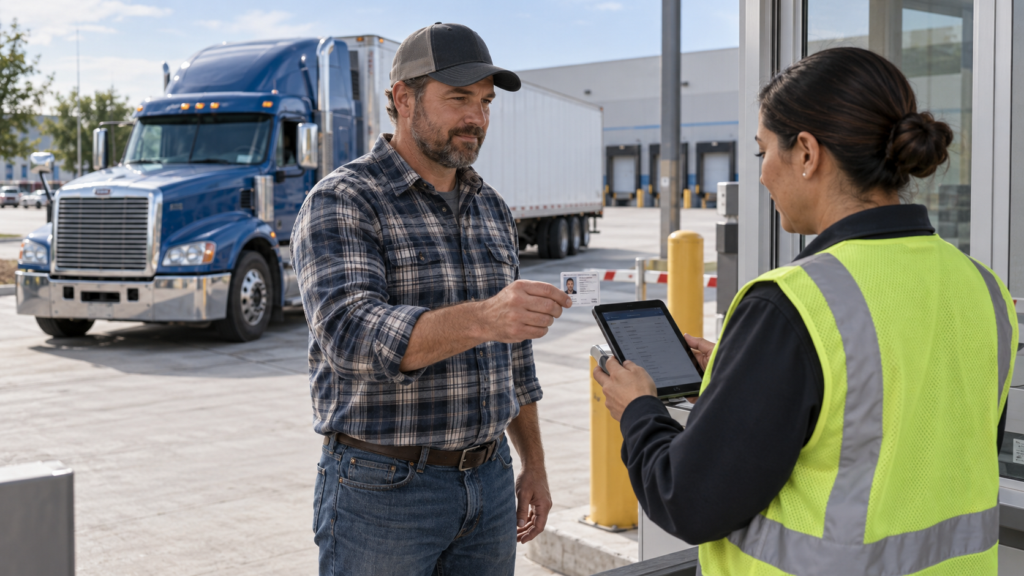
Freight broker driver verification is a shipment-security control that can help confirm the person and equipment arriving for a load match the carrier and load record.

Freight Broker Driver Verification: What to Check
Carrier vetting and driver verification answer different questions. One checks the business; the other checks who and what actually arrived for the load.
Carrier Qualification vs. Driver Verification
Carrier qualification asks whether the motor carrier is authorized and acceptable under the broker’s selection process. Driver qualification involves licensing, medical qualification, employment, driving history, drug-and-alcohol rules, and other duties that generally belong to the motor carrier. Driver verification asks a narrower operational question: is this the person and truck expected for this shipment?
What FMCSA Recommends for Fraud Prevention
FMCSA’s Broker and Carrier Fraud and Identity Theft guidance encourages customers to maintain driver and vehicle logs, confirm the name and numbers on the truck that arrives to load, record tractor and trailer plate information, request truck and trailer photos, and compare those details with carrier packets.
Those recommendations are aimed at fraud, identity theft, and fictitious pickup risk. They are not a statement that brokers become the driver’s regulatory employer or motor carrier.
Why Carrier-Only Verification Can Miss a Fraud Event
A fraudster can impersonate a legitimate carrier using a real USDOT number, copied insurance certificate, compromised email account, or stolen load-board credentials. A carrier record may look normal while the wrong person and truck arrive at the shipper. Shipment-level driver and equipment verification helps connect the business identity to the physical pickup.
What a Broker Can Verify at the Shipment Level
- Driver name and the phone number used for the tracking request.
- Driver license information when collected under a lawful company process.
- A selfie comparison with the identity document.
- Vehicle registration information.
- Truck, trailer, plate, and unit-number photos.
- Whether the driver accepted tracking on the expected device.
- Whether the device is at the expected pickup location.
- Whether the carrier, driver, and equipment match the approved shipment record.
What a Broker Should Not Claim
- That identity verification is the same as a complete FMCSA driver-qualification file.
- That a selfie match proves a driver’s CDL is valid in every respect.
- That a location point proves the cargo is physically on the truck.
- That software can guarantee a driver or carrier will never commit fraud.
- That one mismatch proves criminal conduct without investigation.
When Driver-Level Verification Is Especially Useful
The control can be particularly valuable for high-value freight, new carrier relationships, after-hours pickups, identity inconsistencies, last-minute driver substitutions, and lanes experiencing strategic cargo theft. The same process can also help a shipper know who should be allowed through the gate.
How CargoGuard Fits
CargoGuard is designed for this shipment-level verification layer. It can collect a driver’s license, selfie, registration, truck and plate photos, tracking acceptance, location events, and delivery documents, then present discrepancies to the broker. The broker still needs carrier due diligence, written procedures, and human review. Learn more at Driver Verification Software.
Frequently Asked Questions
Does FMCSA require brokers to maintain driver qualification files?
Motor carriers—not ordinary property brokers—have the direct regulatory responsibility for driver qualification files. A broker may still collect shipment-level driver information for fraud prevention or contractual reasons.
Should a shipper check the driver’s identity?
FMCSA fraud guidance supports maintaining driver and vehicle logs and comparing pickup equipment to the contracted carrier. The shipper should follow a consistent procedure and applicable privacy rules.
Is carrier authority enough to prevent fictitious pickup?
No. Carrier authority identifies the registered business. A fictitious-pickup scheme can impersonate that business, which is why physical driver and equipment verification can add value.