

Freight Compliance Support and Infrastructure
Organize shipment records, verification evidence, access requirements, and integration controls before deployment. CargoGuard can support your team’s review process, but your organization remains responsible for deciding which legal, regulatory, contractual, security, and customer requirements apply.
Keep the Shipment Record Together
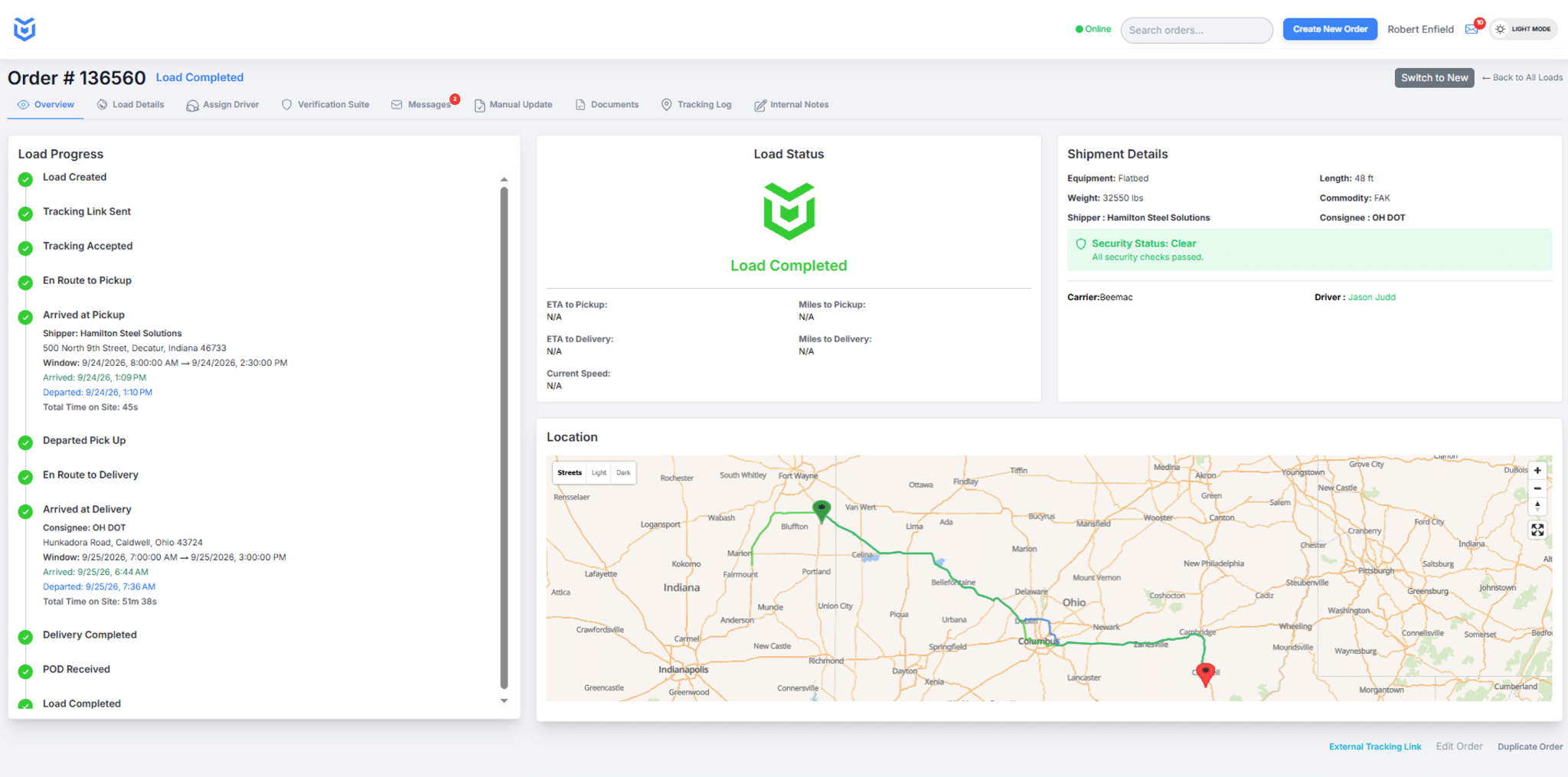
A compliance or claims review is easier when the team can reconstruct the load from one place: who was assigned, what was verified, where the shipment reported, which alerts occurred, what was photographed, and what documents closed the delivery.
What Does “Freight Compliance Support” Mean Here?
CargoGuard can help your team organize shipment information used during an internal, customer, security, claims, or vendor review. That can include driver-verification results, tracking history, pickup photos, alerts, and delivery documents. The software supports record collection and review; it does not determine which regulations apply to your business or certify that a load, carrier, shipper, broker, or customer is compliant with every requirement.
Before implementation, identify the rules that matter to your operation—such as contractual customer requirements, insurer procedures, internal security policies, record-retention standards, privacy obligations, or regulatory requirements—and map each one to the records and controls you actually need.
Shipment Records to Review
Driver and vehicle information: review the available driver verification, registration information, and truck evidence against the shipment assignment.
Tracking and shipment progress: review location updates, shipment status, timeline events, and the context around missing or delayed updates.
Pickup evidence: use pickup and truck photos as part of the handoff record. A photo supports review but does not independently prove carrier authority or regulatory compliance.
Delivery documents: keep bills of lading, proof of delivery, and other shipment documents tied to the load so the team can answer customer or claims questions later.
Fraud and Identity Review Still Requires Independent Checks
CargoGuard records can help a broker or shipper compare the driver, truck, tracking activity, and shipment evidence, but the team should still use established verification procedures when something does not match. FMCSA’s fraud and identity-theft guidance recommends independently confirming contact information and checking the truck and driver arriving for the load when fraud is a concern.
See FMCSA guidance on broker and carrier fraud and identity theft.
Retention, Access, and Export Requirements
Before rollout, decide how long your organization needs each category of shipment record, who can see it, and whether the record must be exportable for customers, claims, audits, or investigations. Driver identity data may deserve different access and retention treatment from an ordinary shipment status or delivery timestamp.
Do not assume that a platform default automatically matches your legal or contractual retention obligation. Describe your requirements to CargoGuard and confirm the current product behavior and available controls before making the platform part of a formal policy.
API and Infrastructure Review
For a CargoGuard API integration, review which system creates the shipment, which fields are exchanged, which events are sent, who owns the credentials, and which downstream systems receive the data. Request current technical documentation for authentication, connection security, webhook validation, logging, request limits, test access, and error handling.
The Data Security and API Controls page provides a fuller shared-responsibility checklist. Your organization remains responsible for the TMS, middleware, user accounts, credentials, exports, storage, and other systems it controls.
Vendor and Security Questionnaire Review
If your customer, insurer, IT team, or procurement process requires a security questionnaire, send the actual questionnaire to CargoGuard. Separate questions into documented controls, implementation details, and requirements that need supporting evidence. Ask for the current material rather than inferring a certification or compliance status from a marketing statement.
For example, if your organization requires a particular audit report, protocol version, encryption configuration, data residency commitment, or contractual term, verify that item directly before deployment. This page intentionally does not claim certifications or attestations that are not documented here.
Pre-Deployment Compliance and Infrastructure Checklist
- Identify the legal, contractual, insurer, customer, and internal requirements that apply to your operation.
- List the shipment, driver, tracking, photo, alert, and document records needed for those requirements.
- Define who can access each record type and who can export it.
- Set retention expectations by data category instead of treating every record the same.
- Confirm how driver identity information and shipment documents are handled in your workflow.
- Map every TMS, API, webhook, middleware, and downstream system that receives CargoGuard data.
- Review authentication, credentials, logging, rate limits, error handling, and access removal before production.
- Test the workflow with normal loads, changed drivers, missing updates, failed API calls, and disputed delivery records.
- Request supporting evidence for any certification or control your organization must rely on.
- Assign an owner for future policy, integration, credential, and retention changes.
Compliance and Infrastructure Questions, Answered
Does CargoGuard certify that a shipment is compliant?
No. CargoGuard can organize verification, tracking, photo, alert, and document records that support your review. Your organization remains responsible for determining the requirements that apply and deciding whether its process satisfies them.
Can CargoGuard support a customer or claims review?
CargoGuard can help keep available shipment records together so authorized users can review what was recorded before pickup, during transit, and at delivery. Whether those records satisfy a specific customer, insurer, legal, or claims requirement depends on that requirement.
What should we confirm about record retention?
Identify which records you need, how long you need them, who may access them, and whether they must be exportable. Then confirm the current CargoGuard behavior and available controls before writing those assumptions into your internal policy or customer agreement.
How should we evaluate CargoGuard for a regulated or high-value workflow?
Start with the actual requirements for the commodity, customer, insurer, geography, and systems involved. Share those requirements with CargoGuard, review the current product and technical documentation, and document any gaps before rollout. Do not assume a generic freight-security feature satisfies a specialized regulatory requirement.
Can our IT or procurement team send a security questionnaire?
Yes. Send the questionnaire with the planned data flow, TMS or integration details, required controls, and any evidence requests. That lets the review focus on the deployment you are actually considering.
Does CargoGuard replace legal, regulatory, insurance, or security advice?
No. CargoGuard provides software and product information. Use your legal, compliance, insurance, security, and operational advisers when professional interpretation or formal approval is required.
Review Your Shipment Requirements
Bring your documentation, security questionnaire, TMS details, and record-retention needs. We’ll review the current CargoGuard capabilities relevant to your deployment.