
Concealed Freight Damage: Can You File a Claim After Signing a Clean POD?
Quick Answer
Yes, a shipper may still pursue a concealed freight damage claim after a clean proof of delivery (POD). A clean receipt makes evidence especially important because the visible delivery record does not document damage. Notify the carrier promptly, request inspection, preserve the product and packaging, and file a proper monetary claim within the governing deadline.
The key issue is proving that the loss occurred during the carrier's responsibility, rather than after delivery.
In this article
What counts as concealed freight damage?
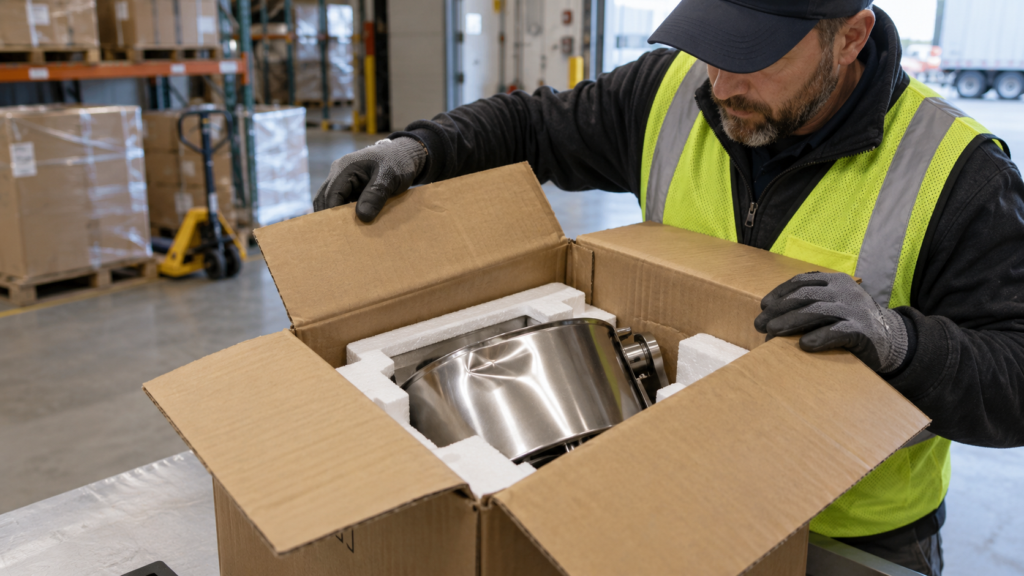
Concealed damage is damage that was not apparent when the shipment was delivered. An outer carton may look acceptable while the product inside has a cracked housing, bent component, or other loss.
The absence of a delivery exception does not prove that every item inside a sealed package was sound. It also does not prove the carrier caused a defect discovered later.
The claim needs a supported timeline. Establish the condition before shipment, handling during transportation where evidence exists, and what happened between delivery and discovery.
Why does a clean POD make the claim harder?
The POD is contemporaneous evidence of the delivery. If it has no exception, the carrier may question whether the damage arose after unloading.
That question becomes harder to answer if the goods were moved repeatedly, unpacked days later without photographs, or mixed with other inventory.
Start by identifying what the receiver could actually see. A signed receipt for shrink-wrapped pallets is different from a documented inspection of each unpacked product.
Be precise. Do not retroactively add a damage notation to a signed document. Preserve the original and create a separate dated discovery report.
Is there a five-business-day deadline?
NMFC concealed-damage guidance commonly calls for prompt notice and, unless the carrier specifies otherwise, notice within five business days. It also addresses the additional evidence needed when reporting occurs later. Whether that provision applies depends on the carrier's participation and governing terms. Source: Transportation & Logistics Council's reproduction and explanation of NMFC Item 300135.
This notice-and-inspection window is different from the formal Carmack claim-filing period. Missing a short reporting window is not automatically the same as missing the deadline to file a cargo claim, although delay can seriously weaken the evidence.
Read the actual tariff and agreement. Do not assume that every carrier uses the same five-day language or that prompt notice alone constitutes a monetary claim.
What should the receiver do immediately?
Stop unnecessary movement of the affected goods. Photograph the unopened or partially opened packaging, labels, pallet, cushioning, and damaged product.
Record the delivery time, discovery time, who opened the package, where it was stored, and every material movement after delivery. Identify the employee responsible for unloading.
Notify the carrier in writing and request inspection. Retain the shipping container and contents in their discovery condition as far as practical, while addressing genuine safety or preservation needs.
If the carrier declines inspection, preserve that response. A declined inspection does not excuse the shipper from documenting its own evidence.
What evidence helps establish the damage happened in transit?
A useful packet can include:
- Pre-shipment quality checks and product-condition photographs.
- Packaging specifications and photographs showing how the item was protected.
- The bill of lading, clean POD, and shipment references.
- Discovery photographs and an unboxing record.
- Receiving logs, storage records, and relevant video.
- Witness statements describing unloading and post-delivery handling.
- A qualified inspection explaining the damage pattern and likely mechanism.
- Repair estimates, invoice value, and salvage information.
Evidence should answer a concrete question. For example, receiving footage may show that a pallet was stored untouched until opening. A packaging inspection may help distinguish an impact event from a manufacturing defect.
Do not overstate an expert's conclusion. “Consistent with impact” is different from proof that a named carrier caused the impact.
How should the formal claim be filed?
Submit the claim to a proper carrier through the applicable channel, not just to a customer-service contact who has not confirmed responsibility for receiving claims.
The federal filing rule requires shipment identification, an assertion of liability, and a specified or determinable monetary demand. Supporting photographs alone are not a substitute for that claim. Source: 49 CFR § 370.3.
Keep notice, inspection, filing, and lawsuit deadlines in separate fields. Notify your cargo insurer under its own policy requirements as well.
Frequently Asked Questions
Should a receiver refuse every shipment it cannot fully inspect?
No. Establish a receiving procedure appropriate to the product and service. Record visible exceptions accurately and inspect concealed contents promptly.
Does “subject to inspection” guarantee claim payment?
No. A general phrase does not establish the cause, timing, or value of damage. Specific evidence remains necessary.
Can I discard the packaging after photographing it?
Preserve it for inspection where practical. If safety, perishability, or another urgent condition requires action, coordinate and document the reason before disposal.
Make discovery records part of the load history
CargoGuard's document capture workflow can be part of your shipment-record process. Book a demo to discuss how your team collects delivery documents and supporting records.
Claim outcomes depend on the shipment evidence and governing law; a clean POD neither guarantees defeat nor guarantees recovery.