

Review Unauthorized Carrier Substitutions
Compare the assigned driver, identity checks, truck details, pickup photos, and shipment activity when an unexpected driver, vehicle, or carrier appears. CargoGuard gives your team evidence to review before deciding what needs to be confirmed.
Check the Driver Identity
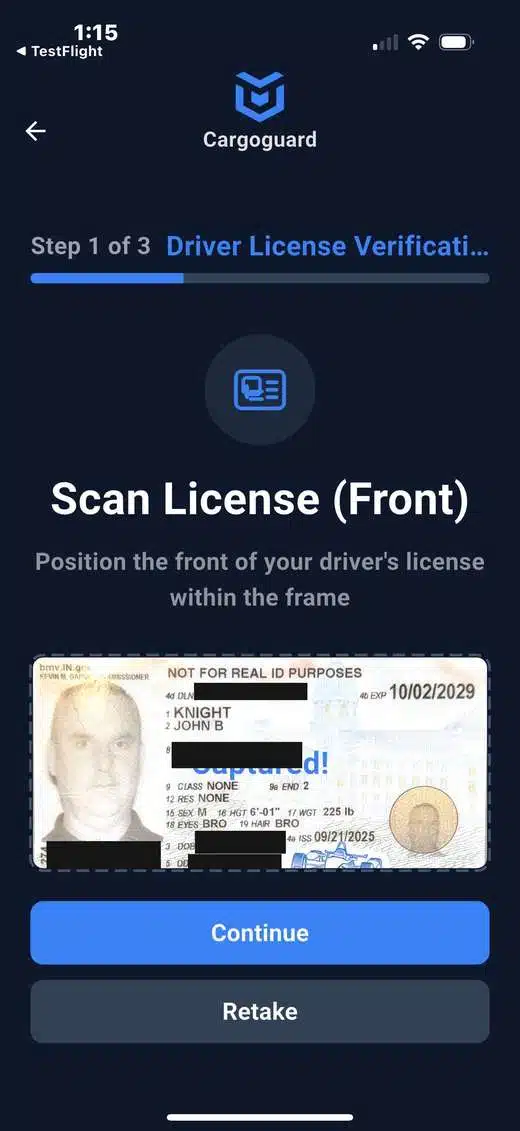
CargoGuard’s driver workflow can give the broker identity information to compare before pickup. The goal is to help the team notice when the person completing the shipment workflow does not fit the expected assignment.


Compare the Truck and Carrier
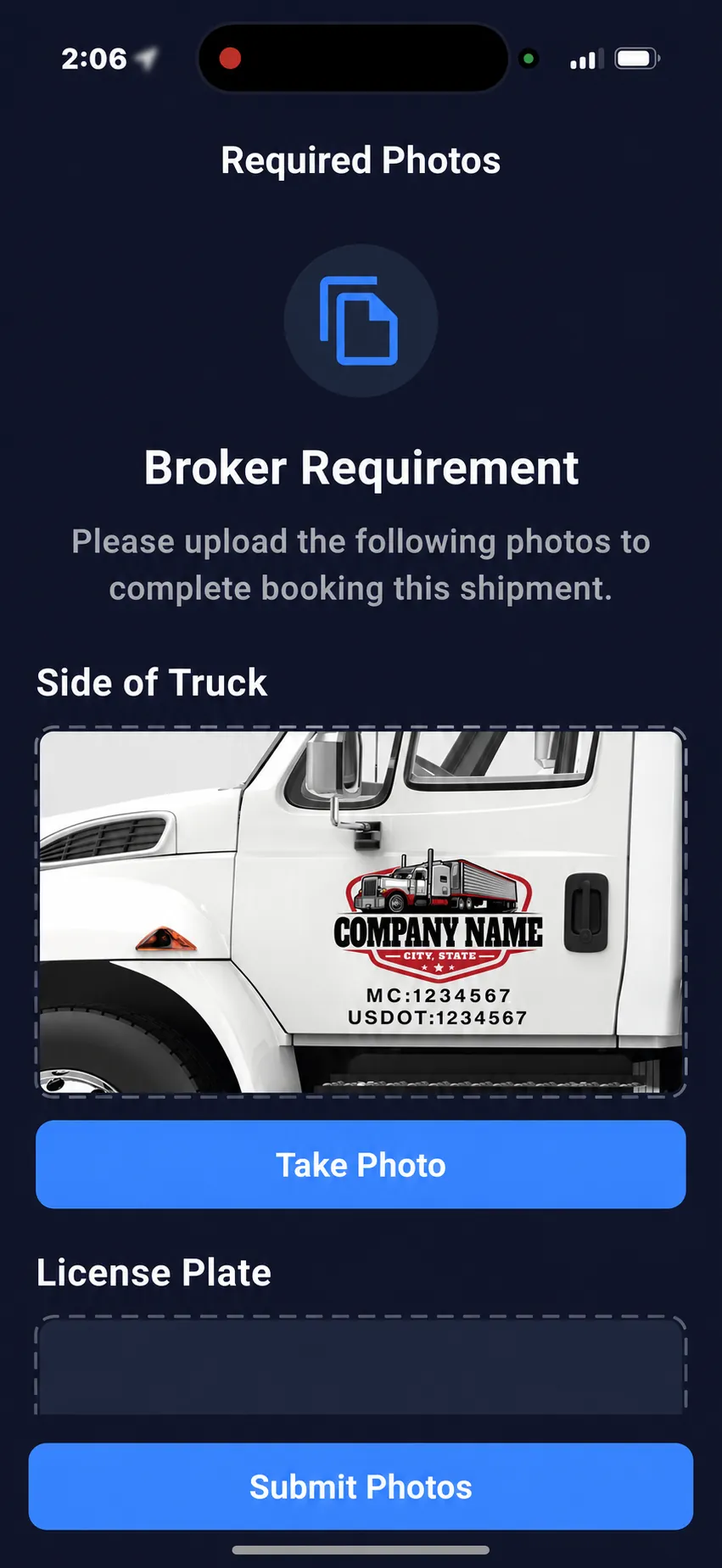
Driver identity is only one part of the pickup. The truck and registration information should also be reviewed against the carrier assignment and the instructions the shipper received.
What Is an Unauthorized Carrier Substitution?
An unauthorized carrier substitution occurs when the driver, truck, or carrier that appears for a shipment is different from the party the broker or shipper expected, and that change has not been properly confirmed. A substitution is not automatically fraudulent—legitimate dispatch or equipment changes can happen—but an unexplained mismatch should be resolved before the freight is released or the load continues.
The same operational concern is sometimes described with phrases such as driver identity swapping, courier identity swapping, unauthorized substitution, or an unexpected carrier handoff. In truckload freight, the practical question is the same: does the person and equipment handling the load match the approved assignment?
A Practical Substitution Review Workflow
1. Compare the expected driver with the person completing the workflow
Review the available driver verification information and the driver tied to the shipment. If the identity information, phone, or assignment does not fit what the broker expected, stop and clarify the discrepancy through an established carrier contact before treating the change as approved.
2. Compare the truck with the assigned carrier
Review registration details and requested truck photos. Carrier markings, USDOT or MC information, plate details, and the type of equipment can give the broker and shipper facts to compare with the load assignment. A mismatch should be explained, not ignored.
3. Confirm the change through a known contact
Do not rely only on a new phone number, text message, or email supplied during the disputed pickup. Use the carrier contact information your company already has or independently verifies. FMCSA recommends independently confirming contact information and checking the truck and driver arriving for the load when fraud or identity theft is a concern.
See FMCSA guidance on broker and carrier fraud and identity theft.
4. Follow the active load for new inconsistencies
After pickup, review real-time freight tracking, the load status timeline, and any shipment alerts. Unexpected device changes, potential GPS manipulation, missing updates, or a route concern can justify follow-up, but those signals should be investigated with the rest of the shipment record rather than treated as proof that a carrier substitution occurred.
Authorized Change vs. Unexplained Substitution
Freight operations can involve legitimate last-minute changes. A driver can become unavailable. A tractor can be swapped. A carrier can communicate a corrected assignment. The important difference is whether the responsible parties know about the change and whether your company can verify it through the normal approval process.
An unexplained substitution is more concerning when several facts conflict at once—for example, the arriving driver is not the expected person, the truck markings do not fit the assigned carrier, the phone information changed, and the new contact cannot be confirmed through an established source. CargoGuard helps organize those facts so the team can investigate before making a release or escalation decision.
Keep the Evidence With the Load
When a handoff or substitution is questioned, keep the available verification results, truck photos, tracking history, alerts, communications, and delivery documents associated with the shipment. A complete record is more useful than any single alert because it shows what the team knew before pickup, what changed in transit, and what was recorded at delivery.
Unauthorized Substitution Questions, Answered
What detects driver or courier identity swapping?
In truckload freight, identity substitution is best reviewed by comparing several sources rather than relying on one detector. Check the assigned driver, license and selfie verification, vehicle registration, truck photos, known carrier contact information, and shipment activity. Conflicting information can identify a situation that needs investigation.
What is unauthorized substitution in freight?
It is an unconfirmed change in the driver, equipment, carrier, or handoff compared with the approved shipment assignment. The change may be legitimate, but it should be verified before the team treats it as authorized.
Does a driver mismatch prove double brokering?
No. A mismatch is a reason to investigate. Legitimate driver or equipment changes happen. Confirm the change through an established carrier contact and compare the available shipment evidence before drawing a conclusion.
Can a shipper help prevent an unauthorized pickup?
Yes. The shipper can compare the arriving driver and truck with the release instructions it received and escalate mismatches before releasing freight. See the CargoGuard shipper workflow for more on pickup review.
Can tracking alone prevent an unauthorized carrier transfer?
No. Tracking helps teams follow the shipment and investigate unexpected activity, but it does not independently establish identity, authority, or custody. Combine tracking with carrier vetting, driver verification, equipment review, pickup controls, and shipment records.
What should my team keep when a carrier substitution is questioned?
Keep the available verification results, registration information, truck photos, shipment history, alerts, communications, and delivery records. Those records help the broker, shipper, carrier, insurer, or other authorized parties understand what happened.
Review the Driver, Truck, and Shipment Together
See how CargoGuard brings driver checks, truck photos, tracking, alerts, and load records into one review workflow.