

CargoGuard Integration Partners
Explore API and integration opportunities for TMS providers, logistics software companies, load-management platforms, and other systems that need shipment, tracking, verification, or event data from CargoGuard.
This page describes integration opportunities and technical planning. It is not a directory of announced or certified partners unless a specific partner is identified separately.
Connect CargoGuard to the Systems Your Team Already Uses
A useful integration starts with a specific workflow, not a logo on a partner page. Define what the connected system needs to create, receive, display, or react to, then map those requirements to the current CargoGuard API.
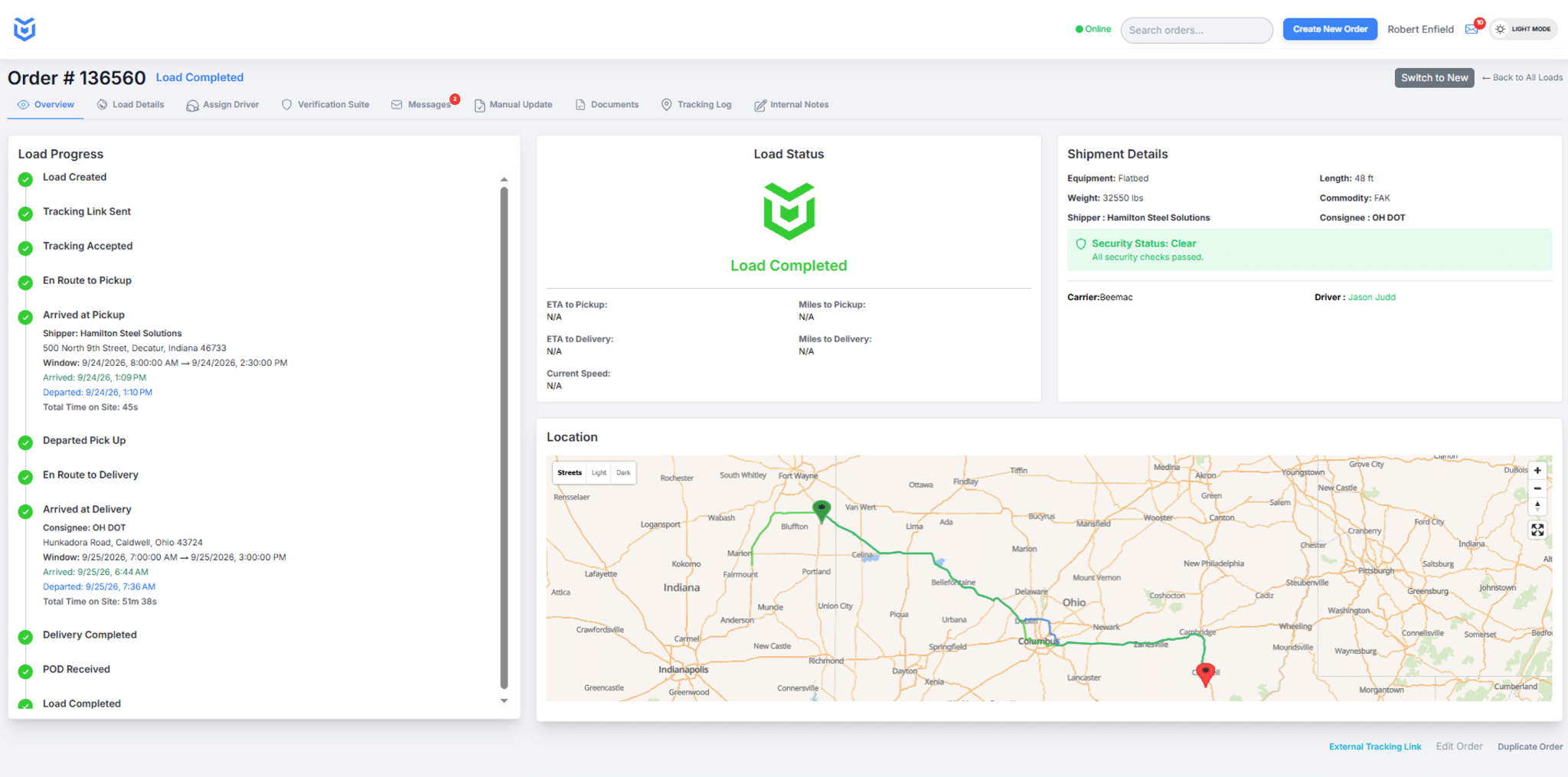
Who Might Integrate With CargoGuard?
TMS providers and customer TMS teams: connect shipment creation, load identifiers, status events, tracking updates, or other supported fields so users can work across systems with less duplicate entry.
Logistics software platforms: use supported shipment, verification, location, or webhook data to add CargoGuard context inside another workflow.
Load boards and transportation marketplaces: explore whether specific CargoGuard events or shipment records could support a defined user workflow. Availability depends on the current API and the scope of the proposed connection.
Middleware and integration teams: connect CargoGuard with internal systems or third-party applications where a direct point-to-point integration is not the best architecture.
Current API Capabilities to Review
Shipment management: review supported methods for creating or updating shipment records and the fields required to match the load between systems.
Location and tracking data: use supported shipment-location information when the connected application needs visibility into active load movement.
Driver verification information: review which verification results are available to an integration and whether your users actually need that information in the downstream system.
Event webhooks: use supported events to trigger updates or workflows in the connected application instead of repeatedly polling for changes.
The Freight Tracking API page is the starting point for technical planning. Request the current API documentation before development so your team is working from the supported specification rather than assumptions or old examples.
Integration Partner vs. Customer Integration
A customer may connect CargoGuard to its own TMS or internal software without needing to become a public integration partner. A formal partner relationship is a separate business and technical discussion that may involve shared customers, support responsibilities, testing, documentation, commercial terms, or joint product planning.
Do not assume that an API connection automatically creates a certified, endorsed, or publicly announced partnership. Define the relationship and responsibilities explicitly.
Plan the Data Flow Before You Build
- Decide which system owns the shipment record.
- Define the identifiers used to match the same load across systems.
- List the exact fields each system needs to send or receive.
- Choose which shipment events need webhook or status handling.
- Document how duplicate, late, missing, or failed events will be handled.
- Decide who owns credentials, testing, production support, and incident response.
- Confirm retention and access requirements for driver, location, photo, and document data.
- Test the failure cases before moving production traffic.
Security and Access Questions Belong in the Integration Plan
An integration can move shipment and driver information outside the CargoGuard workspace, so the downstream system becomes part of the security review. Confirm current authentication requirements, credential handling, supported access controls, webhook validation, logging, and transport requirements before implementation.
Review Data Security and API Controls for the shared-responsibility checklist. Do not send fields to a downstream application merely because they are available; exchange the minimum information needed for the workflow.
What About ELD and Telematics Integrations?
ELD and telematics compatibility depends on the provider, its available interface, the data required, and the integration architecture. This page does not claim that CargoGuard currently connects to every ELD provider or that one universal ELD connection is available.
If ELD or telematics data is part of your intended workflow, identify the provider and the specific data you want to exchange so CargoGuard can assess the integration path.
What to Bring to an Integration Discussion
Bring the platform name, technical contact, intended users, data flow, required fields, event list, authentication or security requirements, test environment needs, expected transaction volume, and the production-support model you expect. If your use case depends on a capability that is not in the current documentation, identify it before the project is scoped.
CargoGuard Integration Questions, Answered
Does this page list current CargoGuard integration partners?
No. This page explains integration and partnership opportunities. A company should not be treated as an announced or certified CargoGuard partner unless CargoGuard identifies that relationship separately.
Can a broker connect CargoGuard to its TMS without becoming a partner?
A customer integration and a formal partnership are separate concepts. Review the API and your TMS requirements with CargoGuard to determine the technical path for your organization.
Does CargoGuard support webhooks?
CargoGuard’s published API capabilities include event webhooks. Confirm the current supported events, payloads, authentication, retry behavior, and testing process in the latest technical documentation.
Can CargoGuard integrate with every TMS or ELD?
Compatibility depends on the systems involved, their interfaces, the data required, and development and testing work. This page does not claim universal TMS or ELD compatibility.
What should we confirm before starting development?
Confirm the current API specification, supported data, record identifiers, authentication, events, error handling, testing environment, security requirements, responsibilities, and production support plan.
How do we discuss a potential CargoGuard integration?
Use the CargoGuard contact page and include your company, platform, intended workflow, technical contact, and the data or events you need to exchange.
Discuss a CargoGuard Integration
Bring your platform, workflow, fields, events, and technical requirements. We’ll review the current CargoGuard API and the integration path that fits the project.