

Freight Fraud Detection
Freight fraud detection starts with comparing the people, truck, tracking activity, pickup evidence, and shipment records against what your team expected. CargoGuard brings those details together so brokers, 3PLs, and shippers can investigate mismatches before they become bigger problems.
Review the Load With More Context
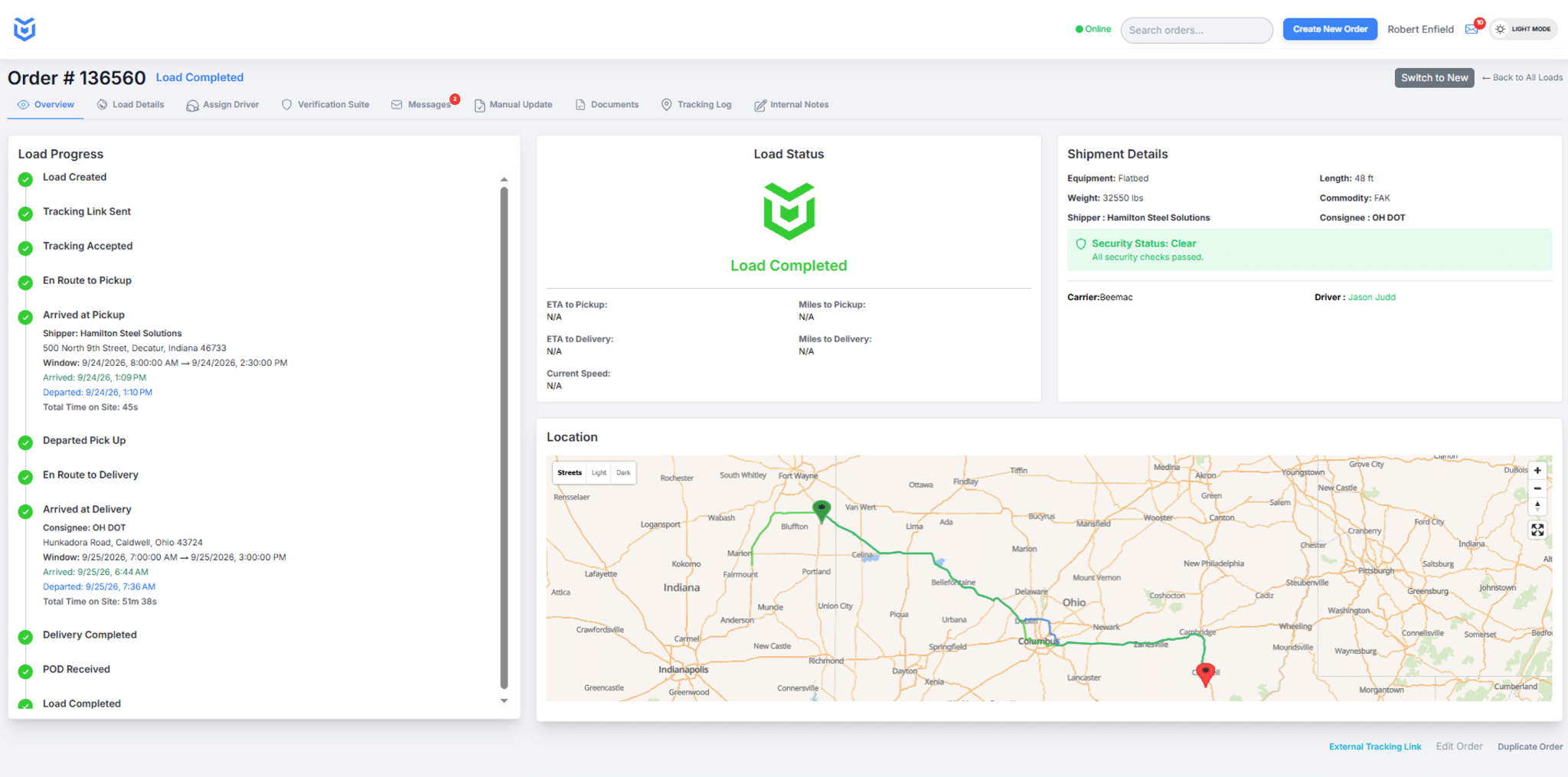
Fraud review is easier when the map, driver details, shipment progress, security status, photos, and delivery records are tied to the same load instead of spread across separate systems and message threads.
What Is Freight Fraud Detection?
Freight fraud detection is the process of identifying shipment information that does not match the expected carrier, driver, truck, pickup, route, or delivery workflow and then investigating the discrepancy. The goal is not to label every unusual event as fraud. It is to give the operations team enough verified context to decide whether the load should continue, pause, or receive additional review.
CargoGuard supports that process with driver verification, shipment tracking, truck and pickup photos, GPS integrity checks, shipment alerts, and organized delivery records.
A Practical Freight Fraud Review Workflow
1. Compare the assigned driver and truck
Before pickup, review the available driver identity and vehicle information against the load assignment. Differences in names, documents, equipment, phone information, or the truck arriving at the facility deserve clarification before freight is released. Use established carrier contact information rather than relying only on a number supplied in a last-minute message.
2. Review pickup evidence
Pickup photos can add context to the driver and truck review. Compare the photographed truck, plate, and other required pickup evidence with the shipment assignment and your facility procedures. CargoGuard’s geofenced photo verification workflow keeps those images associated with the load.
3. Follow the active shipment
After pickup, review the shipment’s progress and any alert that conflicts with the expected trip. An unusual route, missing update, device change, or suspected location manipulation should trigger review—not an automatic conclusion. Compare the alert with the load status timeline, last known location, driver information, and other shipment evidence.
4. Verify through an established contact
If information conflicts, contact the carrier or broker through contact information your team independently trusts. FMCSA recommends confirming broker or carrier phone information through SAFER and checking the truck and driver that arrive for the shipment. That independent verification step is important because fraud attempts often depend on redirecting communication to a false contact.
FMCSA guidance on broker and carrier fraud and identity theft provides additional verification steps.
5. Preserve the shipment record
Keep the information used in the review together: driver and vehicle details, pickup photos, location history, alerts, communications, and delivery documents. A clear record helps operations teams answer customer questions and gives an investigator more context if a shipment is later disputed.
Fraud Detection Is Not a Single Alert
No single GPS point, phone number, photo, document, or software alert proves that fraud occurred. Freight fraud review works best when multiple pieces of shipment information can be compared. CargoGuard is designed to organize those signals and records so the team can investigate quickly without treating an automated flag as a final decision.
For loads where double brokering is the primary concern, see the double brokering prevention workflow. For theft-sensitive freight, review the cargo theft prevention page.
Freight Fraud Detection Questions, Answered
What are common freight fraud warning signs?
Warning signs can include driver or equipment details that do not match the assignment, unexpected contact changes, conflicting pickup information, unusual tracking behavior, or requests to redirect the load. A warning sign should trigger verification rather than an automatic accusation.
Can freight fraud detection software prevent every fraudulent load?
No. Software can support verification, monitoring, alerts, and recordkeeping, but it cannot guarantee that every fraud attempt will be identified. Use technology alongside carrier vetting, pickup controls, established contact procedures, physical security, and trained staff.
How does CargoGuard help with double-brokering reviews?
CargoGuard helps teams compare the assigned driver and truck with verification information and pickup evidence, then follow the active shipment and preserve the related records. When something does not match, the broker can investigate before or during transit.
Does a tracking gap mean the shipment is fraudulent?
No. Tracking can be interrupted by connectivity, device permissions, battery settings, operating-system behavior, or driver participation. Review the available context and contact the responsible party before deciding what the gap means.
What records should a broker keep during a fraud review?
Keep the available driver and vehicle details, pickup photos, tracking history, alerts, delivery documents, and relevant communications. Your company’s legal, insurance, and operational requirements determine how long those records should be retained.
Can CargoGuard connect fraud-review data to our TMS?
CargoGuard offers a freight tracking API. Bring your TMS and required shipment events to a demo so the team can review the current integration options, supported data, authentication, and implementation requirements.
See the Fraud Review Workflow in Action
Bring one of your normal truckload workflows to a CargoGuard demo. We’ll walk through driver review, pickup evidence, tracking concerns, alerts, and delivery records together.