

Real-Time Visibility
See where the load is, what happened next, and what needs attention. CargoGuard brings shipment location, load status, alerts, driver information, pickup evidence, and delivery records into one review workflow for freight brokers, 3PLs, and shippers.
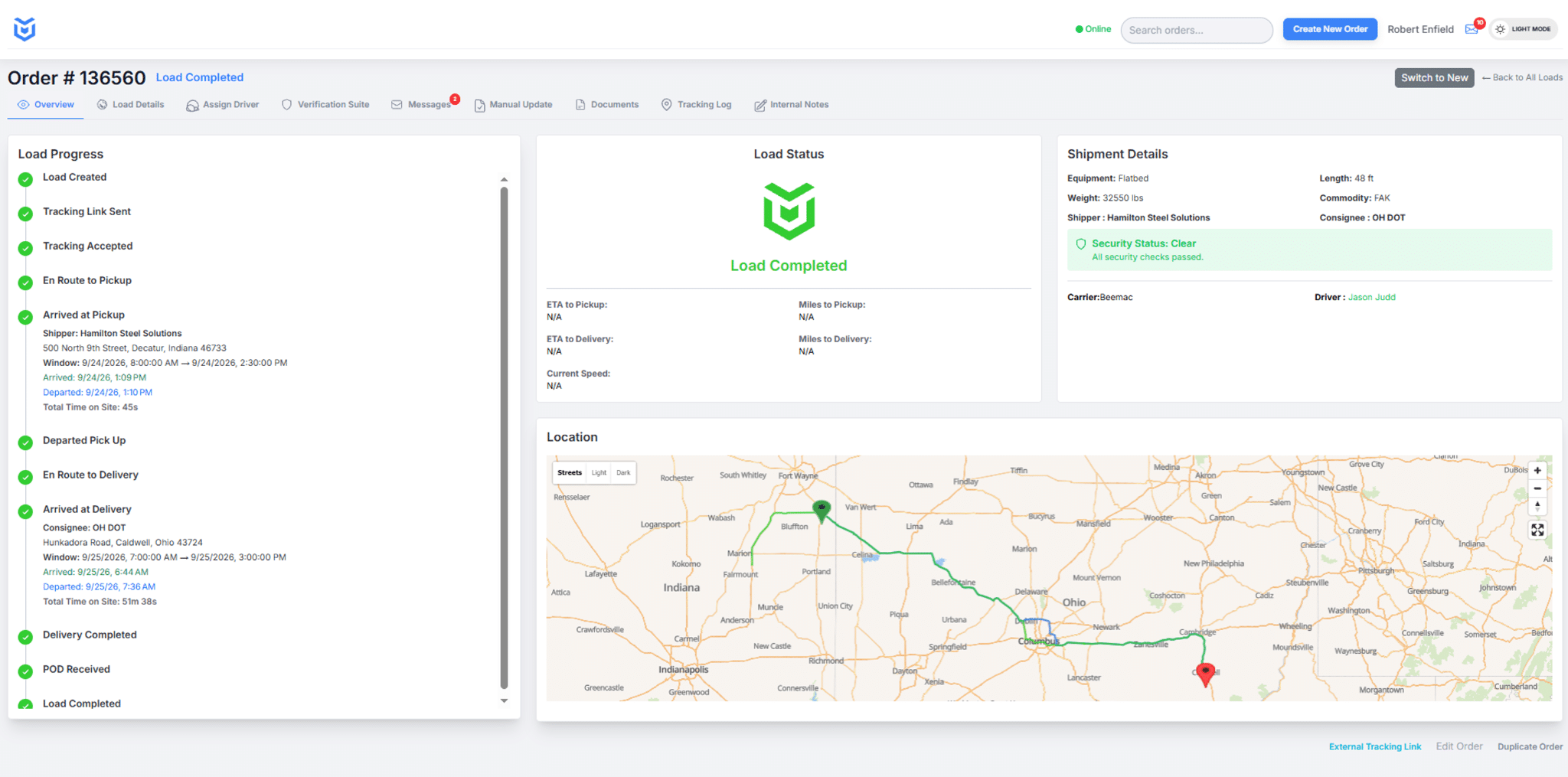
See the Load in One Workspace
Real-time visibility is more useful when the map is connected to the rest of the shipment record. CargoGuard lets teams review location and progress alongside the driver, carrier, security status, shipment details, and supporting records.
What Is Real-Time Freight Visibility?
Real-time freight visibility is the ability to follow an active shipment and review meaningful status changes while the load is moving. A map answers where the phone or tracking source last reported. A complete visibility workflow also helps the operations team answer what happened, whether the update fits the expected trip, and what follow-up is needed.
CargoGuard connects that visibility with driver verification, the load status timeline, pickup photos, shipment alerts, and delivery documents. The goal is to give the person managing the load enough context to decide what to check next.
Follow the Load From Pickup to Delivery
1. Confirm tracking participation
Start by confirming that the assigned driver has accepted the required tracking workflow and that the expected shipment is tied to the correct driver. A sent link or assigned load should not be treated as proof that location updates are actively being received.
2. Review progress against the planned trip
Use the map and shipment timeline together. Location, time, distance, and shipment milestones help a broker or 3PL decide whether the load appears on schedule or needs follow-up. CargoGuard’s real-time freight tracking page explains the active tracking workflow in more detail.
3. Investigate exceptions instead of guessing
When an expected update is missing, compare the last known location, recent status, driver information, alerts, and available evidence before drawing a conclusion. A tracking gap can be caused by connectivity, device permissions, operating-system behavior, or the driver’s participation. Android, for example, places limits on background location access, so mobile tracking should be reviewed as one part of the shipment record rather than as infallible proof.
Android background-location guidance explains why mobile location updates can be affected by operating-system restrictions.
4. Close the load with the supporting record
Arrival at the receiver is not the same as completed delivery paperwork. Review the delivery status and required proof of delivery before closing the shipment under your company’s procedures. Keeping location history, photos, and documents together makes later customer service or investigation easier.
Visibility Is Not the Same as Verification
A location point can show where a participating device reported from. It does not independently prove the driver’s identity, the carrier’s authority, the truck at the dock, or physical custody of the freight. For fraud-sensitive loads, combine visibility with carrier vetting, driver and vehicle checks, pickup procedures, and shipment evidence. FMCSA also recommends independently confirming carrier or broker contact information and checking the truck and driver arriving for the load.
See the FMCSA guidance on broker and carrier fraud and identity theft.
Keep the Right People Informed
Visibility is most useful when the person responsible for the load knows which events matter and who owns the follow-up. Shipment alerts can support arrivals, departures, delivery updates, delays, and other configured concerns. Teams should define the primary responder, backup contact, after-hours process, and when a customer or shipper should receive an update.
For organizations that want shipment events in another system, review the CargoGuard freight tracking API and confirm supported fields, events, authentication, and testing requirements before implementation.
Real-Time Visibility Questions, Answered
What does real-time visibility mean in freight?
It means having current shipment information available while the freight is moving so an operations team can review location, status, delays, and exceptions without waiting for a manual check call. The exact freshness of an update depends on the tracking source, device, connectivity, and permissions.
How is visibility different from a GPS dot on a map?
The map answers where the tracking source last reported. Visibility combines that location with shipment progress, alerts, driver information, pickup evidence, and delivery records so the team has context for follow-up.
Does a missing location update mean the load is in trouble?
Not by itself. Connectivity, permissions, device behavior, or tracking participation can interrupt updates. Review the last known information and contact the responsible party when an expected update is missing.
Can CargoGuard automatically notify customers or shippers?
CargoGuard supports shipment notifications and alerts. Confirm the notification channels, recipients, escalation rules, and event types you want during onboarding so the workflow matches your operation.
Can visibility help with freight fraud prevention?
Visibility can help a team notice unexpected movement, missing updates, delays, or conflicts that deserve review, but it should not be treated as proof of fraud. Combine it with carrier and driver verification, pickup controls, photos, documents, and established contact checks.
Who uses CargoGuard real-time visibility?
CargoGuard is designed for freight brokers, 3PL teams, and shippers that need to follow truckload shipments and keep operational evidence together. The broker, 3PL, and shipper solution pages explain how the workflow changes by role.
See CargoGuard Visibility in Action
Bring one of your normal truckload workflows to a demo. We’ll walk through location updates, shipment progress, alerts, driver information, pickup evidence, and delivery records together.