

Freight Security for Brokers
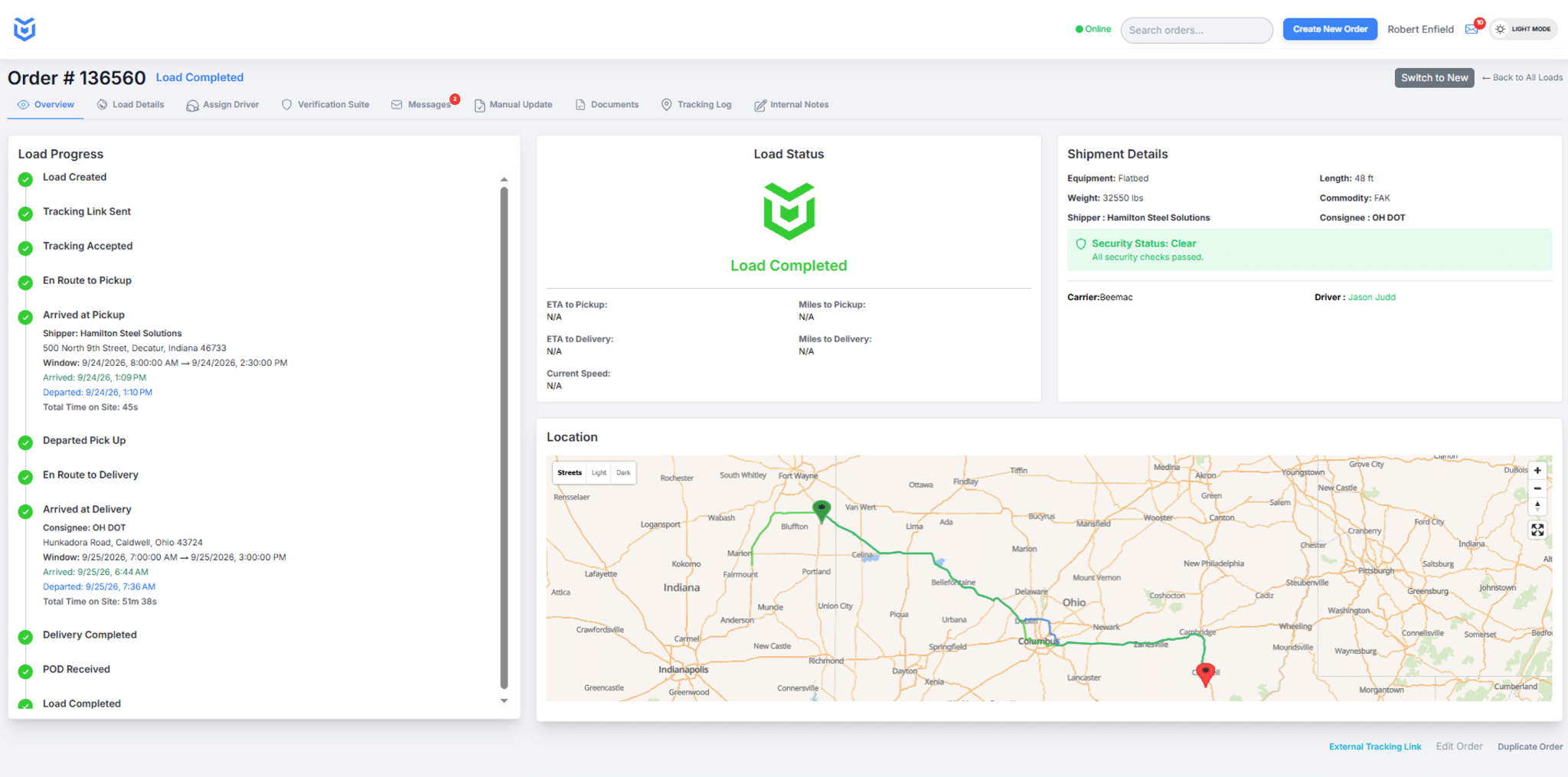
CargoGuard brings driver verification, shipment tracking, pickup evidence, alerts, and delivery records into one review workflow so freight teams can compare what was expected with what actually happened.
One Load. Multiple Security Checks.
Freight security is stronger when identity, equipment, movement, alerts, photos, and delivery records can be reviewed together instead of in separate emails, texts, and tracking tools.
What Does Freight Security Mean in CargoGuard?
CargoGuard treats freight security as a sequence of operational checks around the shipment. Before pickup, the team can review the assigned driver and vehicle information. At pickup, the team can compare truck or location-based evidence with the load assignment. During transit, the team can follow shipment activity and review alerts. At delivery, the team can keep the supporting documents with the load.
No single check proves that a load is safe or fraudulent. The purpose is to give the broker, 3PL, or shipper more evidence to compare when something does not match the expected workflow.
1. Before Pickup: Review the Driver and Assignment
Start with the person expected to collect the freight. CargoGuard’s driver verification software supports license, selfie, registration, and related identity checks so the operations team has information to compare before release.
When the driver, phone, vehicle, or carrier information does not fit the assignment, investigate the discrepancy instead of assuming the change is legitimate or fraudulent. The unauthorized carrier substitution workflow explains how to review an unexpected driver, truck, or carrier change.
2. At Pickup: Compare the Truck and Evidence
Pickup is where identity and equipment meet the physical freight. Use geofenced photo verification to keep requested truck or pickup photos with the load. Compare visible carrier markings, equipment details, registration information, and the shipment assignment.
For a broader fraud review, see the freight fraud detection workflow. FMCSA also advises brokers and carriers to independently confirm contact information and verify the truck and driver arriving for the load when fraud or identity theft is suspected.
See FMCSA guidance on broker and carrier fraud and identity theft.
3. In Transit: Follow the Load and Investigate Exceptions
Use real-time freight tracking and real-time visibility to review location and shipment progress. CargoGuard also supports automated shipment alerts and anti-spoofing GPS checks for concerns that deserve follow-up.
A delayed update, device change, route concern, or potential GPS-manipulation signal does not prove theft or fraud. Compare it with the rest of the shipment record and contact the responsible party when clarification is needed.
4. At Delivery: Keep the Supporting Record
Use secure document capture and the load status timeline to keep delivery documents and shipment events associated with the load. A complete record makes later customer service, claims, fraud review, or internal investigation easier than reconstructing the shipment from separate systems.
Choose the Security Workflow That Matches the Risk
Cargo theft prevention: Review the CargoGuard cargo theft prevention workflow when physical theft, diversion, or high-value freight is the primary concern.
Double brokering: Use the double brokering prevention page when the risk involves unauthorized re-brokering, mismatched parties, or uncertainty over who is actually hauling the load.
Unexpected driver or carrier change: Use the carrier substitution review when the arriving driver, truck, or carrier differs from the approved assignment.
Data and integration risk: Review Data Security and API Controls before sharing shipment, driver, photo, document, or event data with another system.
Compliance and customer requirements: Use the Compliance and Infrastructure page to plan record retention, access, exports, questionnaires, and deployment-specific requirements.
What CargoGuard Does Not Replace
CargoGuard is one layer of a freight-security program. It does not replace carrier vetting, shipper release procedures, insurance requirements, physical security, legal or compliance advice, or the judgment of the people responsible for the shipment. The platform can help organize evidence and identify inconsistencies that deserve review; it cannot guarantee that every fraud or theft event will be prevented.
Freight Security Questions, Answered
What freight security tools does CargoGuard provide?
CargoGuard brings driver verification, shipment tracking, pickup photos, alerts, load history, and delivery documents into one workflow so a freight team can review the load from pickup through delivery.
How can a freight broker investigate a suspicious pickup?
Compare the assigned driver and carrier with available verification results, vehicle information, truck photos, and established contact information. If the details conflict, pause the normal release process and confirm the change through trusted contacts before treating it as authorized.
Does CargoGuard automatically decide whether a load is fraudulent?
No. CargoGuard can surface shipment information and alerts for review. The broker, 3PL, or shipper decides how to investigate and what action to take based on the available evidence and its own procedures.
Can CargoGuard help reduce double brokering risk?
CargoGuard supports a workflow that compares driver and vehicle information with the shipment assignment, follows the active load, and keeps pickup and delivery evidence together. Those checks can help teams identify inconsistencies associated with unauthorized re-brokering, but they do not guarantee that every double-brokered load will be detected.
Can CargoGuard help with cargo theft prevention?
CargoGuard can support theft-prevention procedures with driver and vehicle review, active tracking, pickup evidence, alerts, and delivery records. Physical security, carrier vetting, release controls, and response procedures remain important parts of the overall security plan.
Who is CargoGuard freight security built for?
CargoGuard is designed for freight brokers, 3PL teams, and shippers that need shipment visibility and security information for freight moved by outside carriers. See the broker, 3PL, and shipper workflows for role-specific details.
See the CargoGuard Security Workflow
Bring your normal pickup, tracking, fraud-review, and delivery process to a demo. We’ll walk through the CargoGuard checks that apply to your operation.